
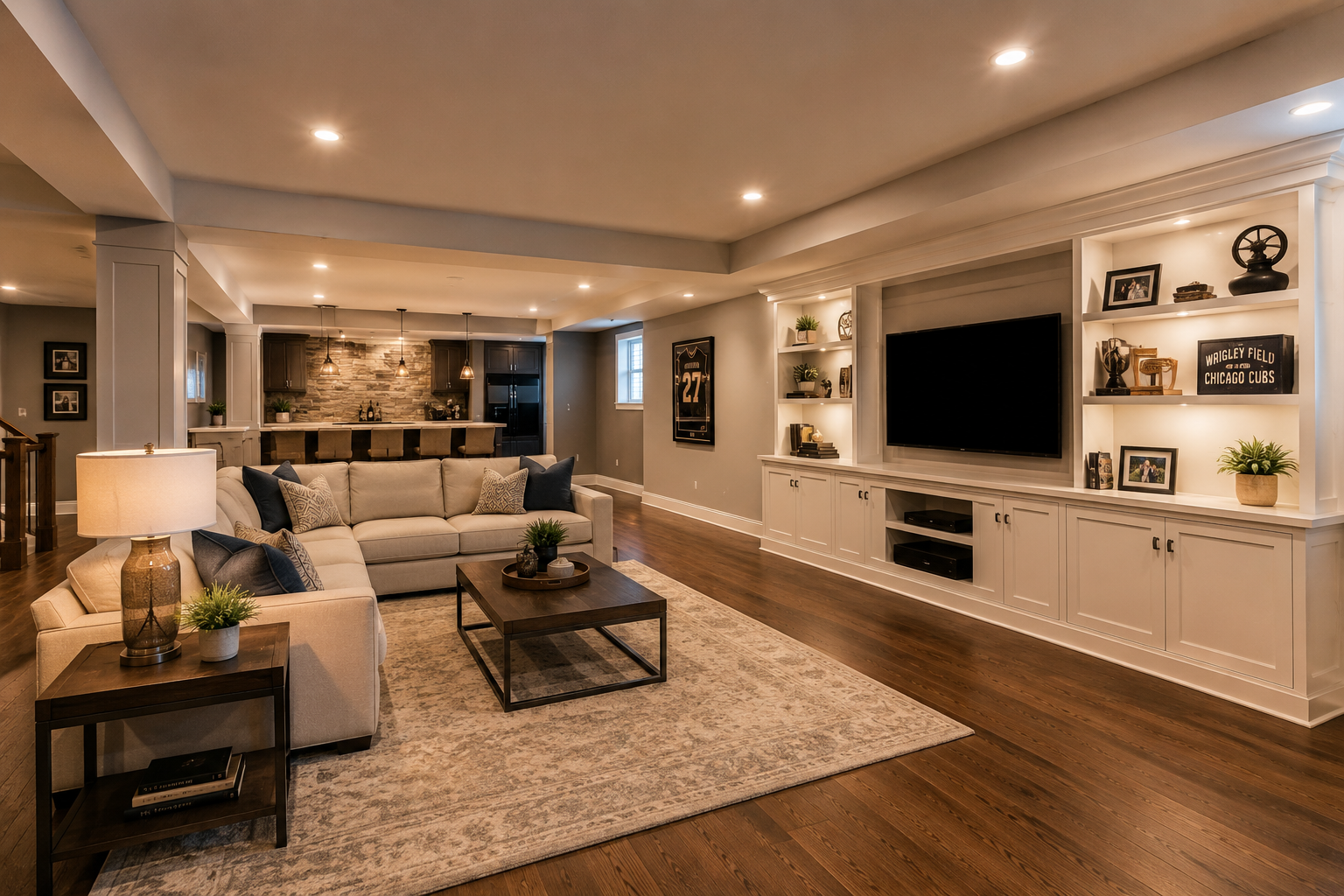
A basement renovation cost estimate in 2026 typically ranges from $15,000 to $75,000. Most homeowners land around $32,000 for a professionally finished space, according to Trusscore (2025). The final basement renovation cost estimate depends heavily on square footage, finish quality, intended use, and the structural condition of your existing space.
Table of Contents
- What the Numbers Actually Look Like in 2026
- Key Factors That Drive Your Basement Renovation Cost Estimate
- Cost by Project Type
- How Inflation Is Affecting Basement Renovation Prices
- ROI: What You Actually Get Back at Resale
- How Gerety Building & Restoration Approaches Basement Projects
What the Numbers Actually Look Like in 2026
Budgeting a basement project without solid benchmarks is one of the most common mistakes homeowners make. Prices vary widely between a basic unfinished-to-livable conversion and a high-end entertainment suite. Therefore, understanding the current market is the first step.
According to Angi (2025), basement remodeling costs average $22,802. Most projects fall between $12,017 and $34,539. For homeowners pursuing higher-end finishes, costs climb quickly. Those adding dedicated rooms such as a home office, gym, or wet bar see totals push toward the upper end of that range and beyond.
On a per-square-foot basis, standard finishes currently run $32 to $80 per square foot. This represents a significant jump from the $15 to $25 range reported in prior years, driven primarily by material costs and growing demand for smart technology integration, according to USA Cabinet Store (2026).
For a 1,000-square-foot basement, that translates to roughly $32,000 to $80,000 depending on scope. A 500-square-foot partial conversion could come in between $16,000 and $40,000. Luxury buildouts exceeding 1,500 square feet routinely top $100,000 in markets like Fairfield County, CT and Westchester County, NY, per data from Gitnux’s 2026 report.
Key Factors That Drive Your Basement Renovation Cost Estimate
No two basements are identical. The variables below separate a $20,000 project from a $70,000 one. Understanding each factor helps you prioritize where to spend and where to pull back.
Structural and Waterproofing Conditions
If your basement has moisture issues, cracks in the foundation, or inadequate ceiling height, address those problems before any finish work begins. Waterproofing alone can add $3,000 to $15,000 depending on severity. Foundation repairs push costs even higher. Skipping this step to save money almost always results in damage to the finished space down the line.
Mechanical Systems
Running new electrical circuits adds significant labor. Additionally, adding HVAC supply and return vents requires careful planning. Installing plumbing for a bathroom or kitchenette ranks among the most labor-intensive portions of any basement build.
Egress windows are required for code-compliant bedrooms in most U.S. jurisdictions. They can add $2,500 to $5,000 per window. Permits are non-negotiable for this type of work and typically run $500 to $2,000 depending on your municipality.
Flooring Selection
Flooring choices carry a significant cost spread. Luxury vinyl plank is popular for basements due to its moisture resistance. It typically runs $3 to $7 per square foot installed. Engineered hardwood offers another option where subfloor conditions allow. However, it costs more and requires careful moisture management.
If you are researching the hardwood flooring installation cost for a premium finish, budget accordingly. Flooring alone can represent 10% to 20% of your total basement renovation cost estimate.
Finish Level and Custom Work
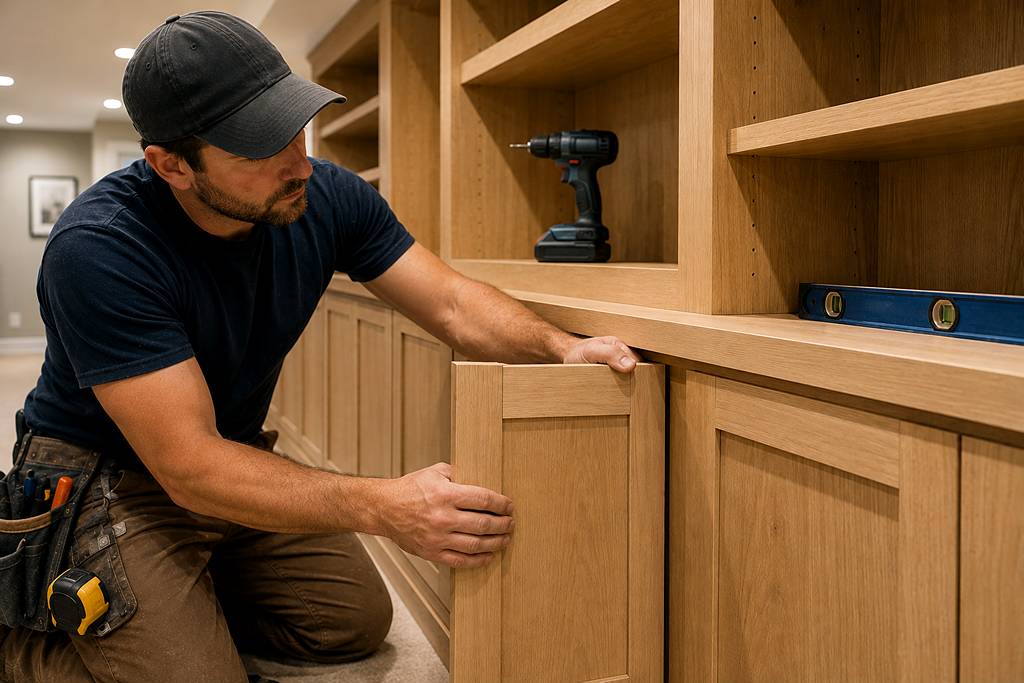
Standard finishes include drywall, basic trim, builder-grade fixtures, and prefabricated cabinetry. Mid-range and luxury finishes involve custom millwork, high-end lighting packages, custom cabinetry, and premium tile or stone.
If you are drawing inspiration from luxury kitchen remodel ideas for a basement wet bar or kitchenette, that scope alone could add $15,000 to $40,000 to your budget.
Dedicated Room Additions
Each functional room adds to the bottom line. A half-bath typically adds $5,000 to $15,000. A full bath with tile shower adds $12,000 to $30,000 or more. A home theater with acoustic treatment, tiered seating, and AV infrastructure adds $20,000 to $60,000. A basement bedroom requires egress compliance, which adds both cost and permitting complexity.
Cost by Project Type
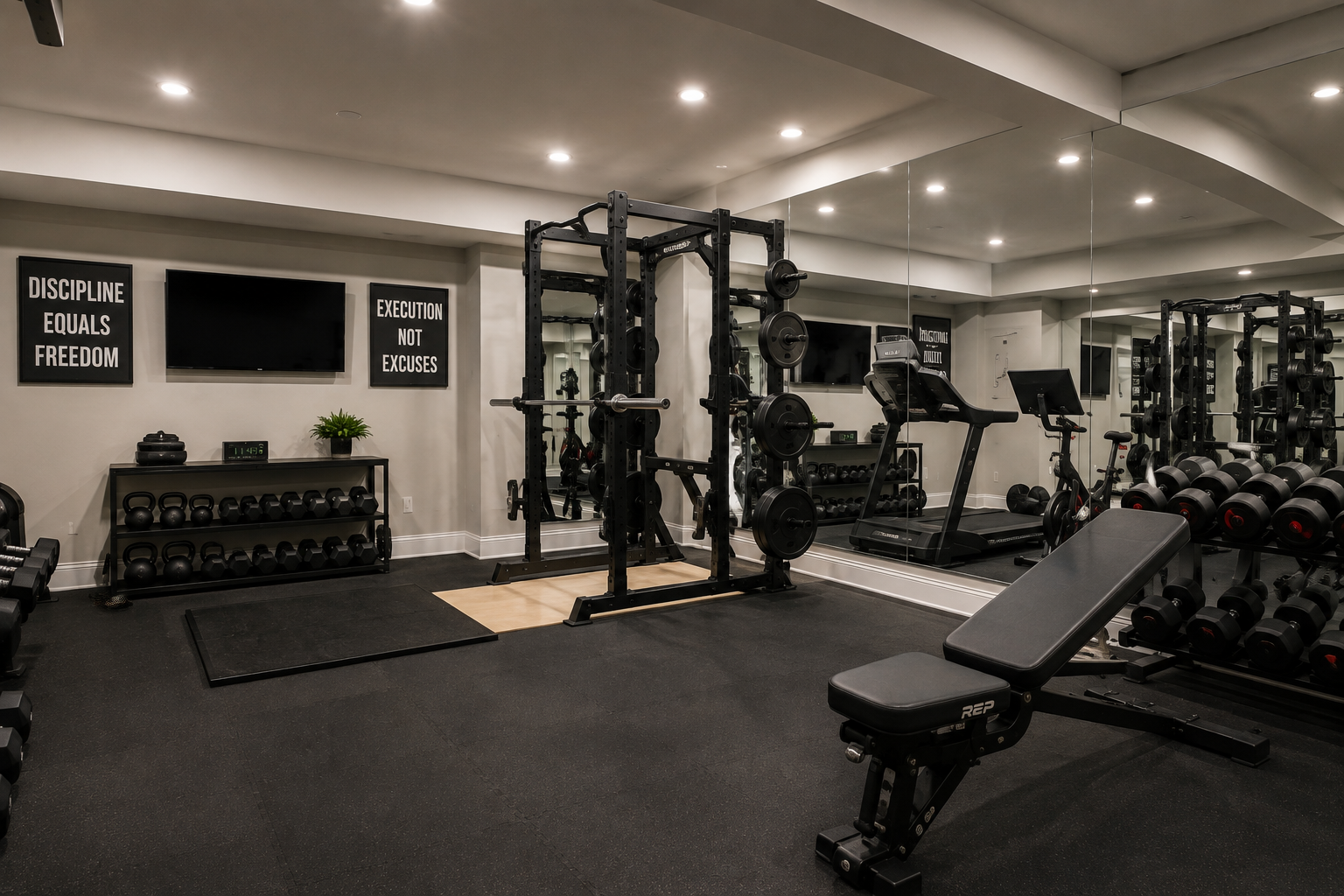
The intended use of your basement is the single biggest variable in scoping a basement renovation cost estimate. Here is a breakdown of common configurations and what each typically costs in 2026.
| Project Type | Estimated Cost Range | Key Cost Drivers |
|---|---|---|
| Basic finished space (open plan) | $15,000 to $30,000 | Drywall, flooring, lighting, HVAC |
| Home office or gym | $20,000 to $40,000 | Soundproofing, flooring, electrical |
| Bedroom + half-bath | $30,000 to $55,000 | Egress window, plumbing, permits |
| Full in-law suite | $50,000 to $90,000 | Kitchen, full bath, separate entry |
| Luxury entertainment suite | $60,000 to $150,000+ | Custom AV, wet bar, high-end finishes |
These ranges reflect national averages adjusted for 2026 inflation. In premium markets like Fairfield County, CT or Westchester County, NY, labor rates and material costs typically push figures 20% to 35% above national benchmarks.
How Inflation Is Affecting Basement Renovation Prices
Construction costs have increased 5.6% for 2026 due to inflation and material shortages. The average basement remodel now costs approximately $24,050 compared to $22,800 in 2025, according to USA Cabinet Store (2026). This reflects broader trends in residential remodeling.
The U.S. residential remodeling market was estimated at $527.36 billion in 2023. It is projected to grow at a compound annual growth rate of 4.6% from 2024 through 2030, according to Grand View Research (2024). That sustained growth puts continued upward pressure on subcontractor availability and material lead times. Both factors affect what you will pay today.
One important takeaway matters: the cost of waiting is real. Materials and labor that cost $X today may cost more in 12 to 18 months. The 2024 U.S. Houzz & Home Study found that more than half of renovating homeowners—51%—spent $25,000 or more on renovations in 2023. This is up from 37% in 2020, reflecting both rising costs and growing renovation ambition among U.S. homeowners (Houzz, 2024).
For homeowners considering projects that extend beyond the basement, strategic planning matters. Pairing an interior renovation with outdoor kitchen design ideas for a cohesive indoor-outdoor entertainment experience can work well. Managing this under a single design-build contract often yields better pricing than handling two separate projects independently.
ROI: What You Actually Get Back at Resale
Return on investment is one of the most common questions homeowners ask before committing to a renovation at this scale. According to Zonda’s 2025 Cost vs. Value Report, homeowners nationally recoup an average of 71% of a basement remodel’s cost at resale. This is based on a benchmark of a $52,012 job cost against $36,905 in added resale value (Zonda, 2025).
That figure reflects a national average. In high-demand suburban markets like those served by Gerety Building & Restoration, finished basements consistently command stronger buyer interest. They attract better resale premiums due to lot size constraints that make square footage expansion otherwise difficult to achieve, particularly in Fairfield County and Westchester County.
Beyond direct resale value, a finished basement delivers real daily utility. You gain additional bedroom capacity, dedicated workspace, fitness space, or a rental income stream where local zoning allows. These functional returns often matter as much as the resale math.
It is also worth considering how the finished basement interacts with the rest of your home. A lower level with a luxury bath featuring thoughtful walk in shower design ideas positions the entire property at a higher price tier. This stands in contrast to a basement with only a half-bath or powder room.
How Gerety Building & Restoration Approaches Basement Projects
With over 40 years serving affluent homeowners throughout Fairfield County, CT and Westchester County, NY, Gerety Building & Restoration brings a design-build approach to basement renovation. We integrate architecture, engineering, permitting, and construction under a single point of accountability.
That matters at this price point. Basement projects involving structural work, waterproofing, plumbing, and high-end finishes require tight coordination between trades. When those trades report to separate general contractors or are self-managed by the homeowner, scope gaps emerge. Schedule conflicts and budget overruns become considerably more likely.
Gerety’s team handles everything from initial site assessment and waterproofing evaluation through permit acquisition, framing, mechanical rough-in, and finish carpentry. Our in-house expertise in custom millwork and historic restoration gives us particular strength. We excel in projects where the basement must match the character and quality of the existing home above.
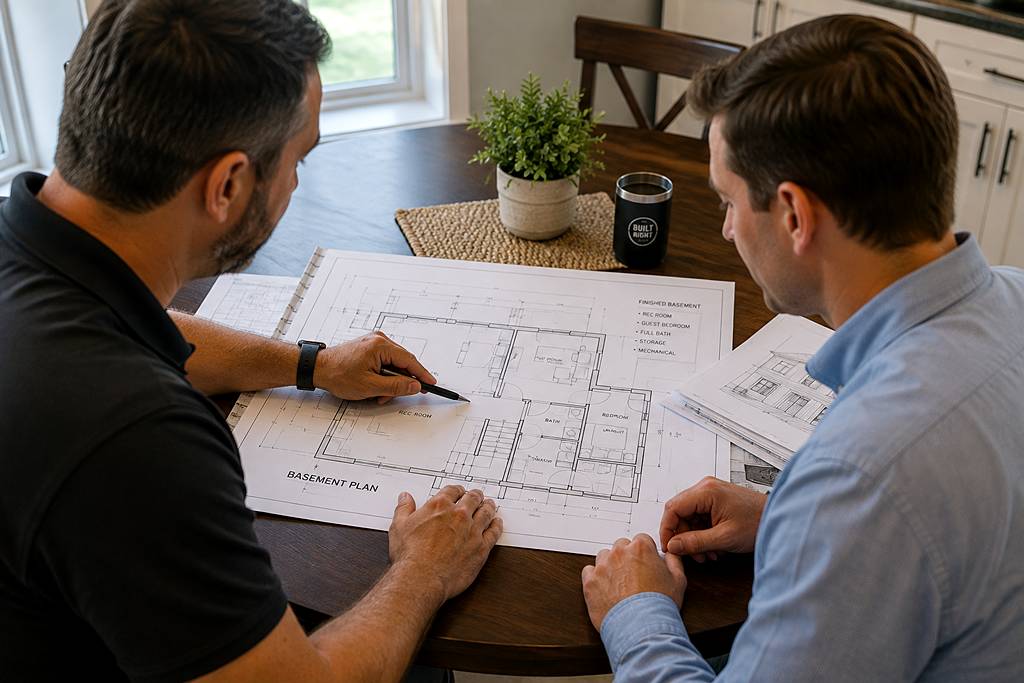
For homeowners in our service area, the basement renovation cost estimate process begins with a detailed walkthrough. We discuss your intended use and assess what the structural and mechanical conditions require before any finish work begins. We do not provide ballpark figures without understanding what is actually below grade first. What we find there determines the real scope.
Things to Know
- Permit requirements vary by municipality, but in Connecticut and New York, basement conversions that add a bedroom, bathroom, or kitchenette almost always require a building permit. Skipping permits can create serious complications at resale.
- Moisture assessment is not optional. A finished basement installed over an unresolved water intrusion problem deteriorates quickly. Remediation after the fact costs significantly more than addressing it upfront.
- Ceiling height matters for code compliance. Most U.S. building codes require a minimum finished ceiling height of 7 feet for habitable rooms. If your basement sits below that threshold, you may need to excavate or lower the slab. This adds substantial cost.
- Not all square footage costs the same. Utility areas, mechanical rooms, and storage spaces cost less to finish per square foot than dedicated living areas with plumbing, egress, and custom finishes. Make sure your estimate distinguishes between these zones.
- Smart home integration is now a common cost driver in luxury basement builds. Pre-wiring for AV systems, automated lighting, and climate control during the rough-in phase costs far less than retrofitting after drywall is up.
- Design-build contracts typically offer better budget predictability than owner-managed multi-contractor approaches at this scale. Change orders and scope gaps between trades are handled internally rather than billed separately.
Schedule Your Basement Renovation Assessment with Gerety
If you are serious about moving forward, the most important next step is getting an accurate picture of what your specific space actually requires. Request a personalized consultation with the Gerety Building & Restoration team. We will assess your basement’s structural conditions, discuss your intended use, and provide a detailed estimate grounded in real scope rather than rough averages. Contact us today to schedule your on-site walkthrough and take the guesswork out of your budget.
Frequently Asked Questions
Q: What is the average basement renovation cost estimate for a 1,000-square-foot space in 2026?
For a 1,000-square-foot basement, most homeowners should budget between $32,000 and $80,000 in 2026, depending on finish level and project scope.
At the lower end, you are looking at open-plan conversions with standard finishes and no added plumbing. Mid-range projects that include a bathroom, dedicated rooms, and upgraded flooring typically land between $45,000 and $65,000. Luxury builds with custom millwork, home theater setups, and wet bars can push well past $80,000 in premium markets like Fairfield County and Westchester County.
Q: Does finishing a basement add value to my home?
Yes, a finished basement adds measurable resale value, though the return varies by market and finish quality.
According to Zonda’s 2025 Cost vs. Value Report, homeowners nationally recoup an average of 71% of a basement remodel’s cost at resale. In high-demand suburban markets in Connecticut and New York, where lot expansion is limited and square footage commands a premium, the functional and resale value of a finished basement tends to outperform national averages. Buyers also place high value on move-in-ready lower levels, which reduces time on market.
Q: How long does a basement renovation typically take from start to finish?
Most basement renovations take between 4 and 12 weeks of active construction, though planning, permitting, and design can add several months before a shovel hits the ground.
Simpler open-plan finishes on a structurally sound basement move quickly once permits are issued. Projects involving waterproofing, egress window installation, plumbing rough-in, or custom millwork take considerably longer. In municipalities with active permit queues, plan review alone can take 4 to 8 weeks. Starting the permitting process early is one of the best ways to protect your intended completion date.
Q: What is the difference between finishing a basement and remodeling one?
Finishing a basement means converting an unfinished raw space into livable square footage, while remodeling refers to updating or reconfiguring a basement that already has some level of existing finish.
A finish project typically involves framing, insulation, drywall, electrical, HVAC, and flooring from scratch. A remodel may involve tearing out dated finishes, reconfiguring room layouts, adding a bathroom, or upgrading mechanical systems in a space that already has walls and flooring. Remodels can sometimes cost as much as a full finish because demolition, disposal, and code-compliance upgrades on older work add real labor and material costs.
Q: Should I waterproof my basement before finishing it?
Yes, resolving any moisture issues before finishing your basement is strongly recommended and in many cases necessary to protect your investment.
Water intrusion, even minor seasonal dampness, can lead to mold growth and structural damage to framing. Deterioration of flooring and drywall occurs over time. Waterproofing methods range from interior drainage systems and sump pump installations to exterior excavation and membrane application. Costs span from a few thousand dollars for minor interior work to $15,000 or more for comprehensive exterior solutions. A licensed contractor should assess the source of moisture before any finish work begins.