
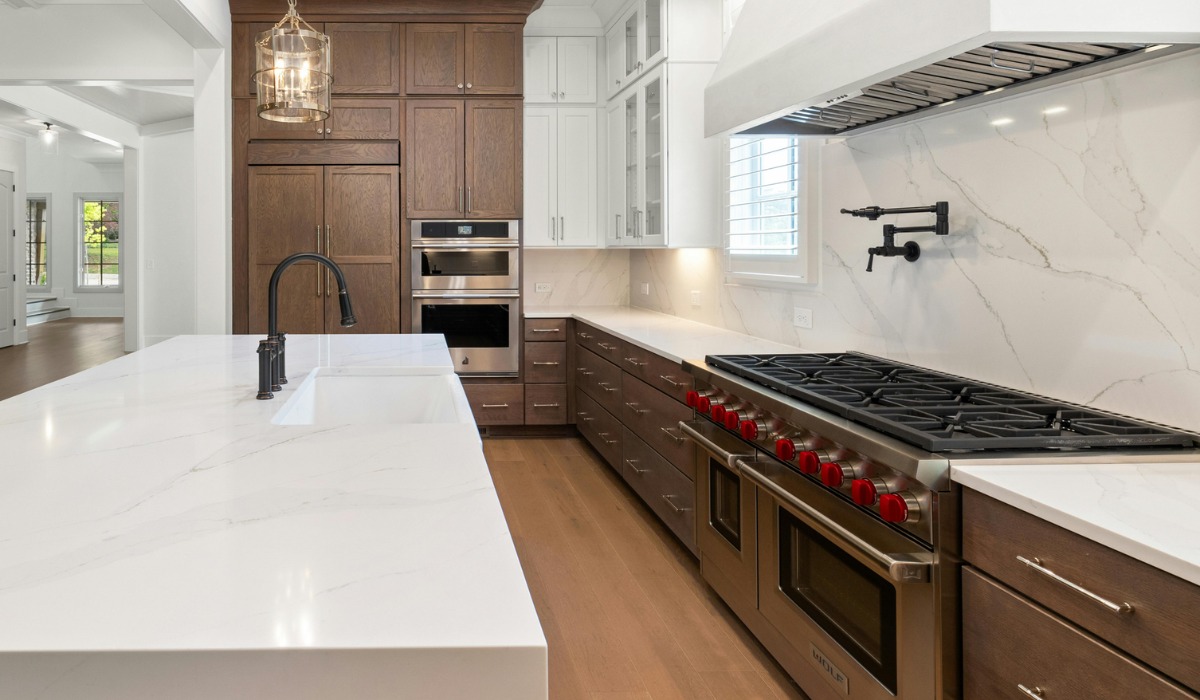
When you are weighing a granite countertop vs quartz comparison, the answer depends on your priorities. Granite wins on natural beauty and heat resistance. Quartz wins on consistency, low maintenance, and stain resistance. The right choice depends on how you use your kitchen, your design priorities, and your long-term maintenance tolerance.
Both materials dominate the premium countertop segment, and for good reason. According to Grand View Research (2026), the U.S. countertops market was estimated at $33.77 billion in 2025. This figure reflects just how central surface selection is to home investment decisions. With that kind of market weight behind both options, understanding the real differences matters before you commit.
What Each Granite Countertop vs Quartz Material Actually Is
Granite is a natural stone quarried directly from the earth. Each slab is one-of-a-kind, with mineral patterns formed over millions of years. Because it is porous, you need to seal it periodically, typically once a year. This sealing prevents staining and bacterial penetration.
Quartz countertops are engineered products. Manufacturers make them from roughly 90 to 95 percent ground natural quartz crystals bound with polymer resins and pigments. That manufacturing process makes quartz non-porous, which means no sealing is needed. Bacterial resistance is built in from the start. The Lifestory Research 2025 America’s Most Trusted Countertop Study identified Caesarstone, Silestone, and Cambria as the most trusted quartz brands in the U.S. This designation shows how well-established the engineered stone category has become.
For homeowners exploring luxury kitchen remodel ideas, both materials can anchor a high-end design. However, they serve different aesthetic philosophies.
Cost Breakdown: Granite Countertop vs Quartz Pricing
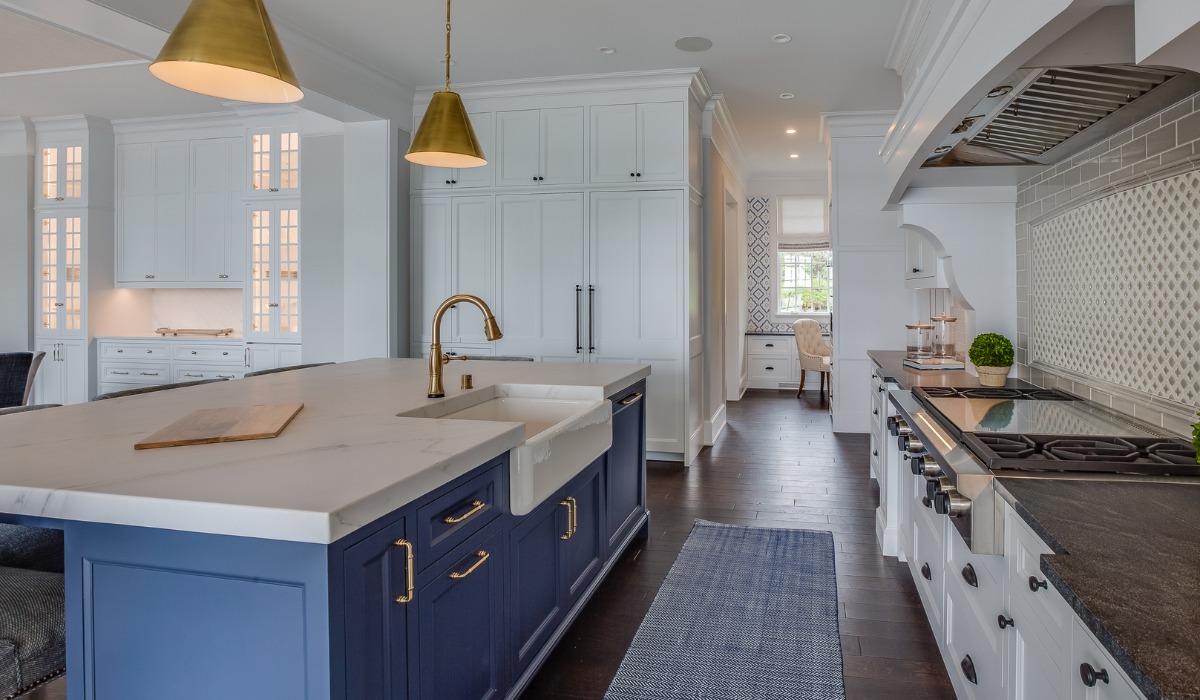
According to SlabWise (July 2026), granite countertops typically cost $40 to $100 per square foot installed. Quartz runs $50 to $120 per square foot installed. The overlap is significant, which means cost alone rarely decides the question.
| Factor | Granite | Quartz |
|---|---|---|
| Installed cost (per sq ft) | $40–$100 | $50–$120 |
| Sealing required | Yes, annually | No |
| Repair difficulty | Moderate | Moderate to difficult |
| Edge profile customization | High | High |
| Color consistency | Varies by slab | Consistent |
| Heat resistance | Excellent | Good (with care) |
The price comparison does not reveal the long-term cost difference. According to NKBA 2025 commercial specification research (March 2026), businesses using quartz instead of natural stone saw a 23% drop in maintenance costs annually over five years. While that data comes from a commercial context, the underlying logic applies at home. Eliminating annual sealing and reducing stain risk adds up over time.
Durability and Performance: Granite Countertop vs Quartz Under Real-World Conditions
Both materials are hard and scratch-resistant under normal kitchen use. However, the practical differences show up in specific scenarios.
Heat: Granite handles heat extremely well. You can set a hot pan directly on it without damage. Quartz, because of its resin content, can discolor or crack under sustained high heat. Therefore, trivets are recommended when using quartz near the stove.
Staining: Unsealed granite absorbs liquids, especially wine, oil, and acidic juices. Quartz is non-porous and resists staining without any treatment. For busy households where counters see heavy cooking traffic, this represents a meaningful practical advantage for quartz.
Cracking: Neither material is immune to cracking under heavy impact. However, quartz’s uniform composition makes it slightly less prone to edge chipping. Granite slabs can have natural fissures that, while typically stable, warrant consideration depending on the specific slab.
Outdoor use: Granite holds up better outdoors because UV exposure can cause quartz resin to yellow or discolor over time. If you are planning outdoor kitchen design ideas, granite is generally the stronger choice for exterior applications.
Aesthetics and Design Flexibility in the Granite Countertop vs Quartz Comparison
This is where the granite countertop vs quartz comparison gets genuinely personal. Granite offers natural variation that no two slabs replicate exactly. For homeowners who prize organic character and uniqueness, that unpredictability is a feature, not a flaw.
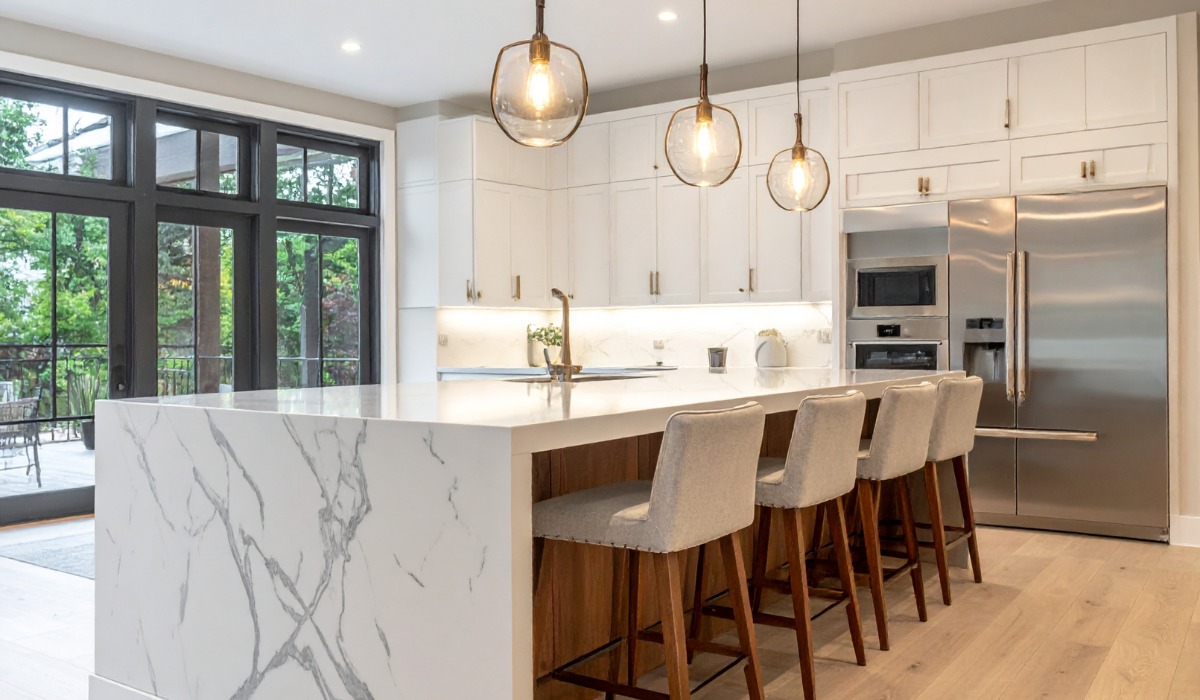
Quartz offers more design control. Because it is engineered, manufacturers can produce consistent coloring and uniform veining. They can create finishes that mimic marble or even concrete. That predictability makes quartz easier to specify across a large renovation, particularly in bathrooms. If you are browsing walk in shower design ideas, quartz panels and surfaces offer that seamless, controlled look many designers prefer in wet spaces.
From a market perspective, engineered stone is expected to become the most popular countertop material. Demand is supported by its aesthetic and performance properties, according to Research and Markets (October 2024). That trend reflects growing consumer preference for low-maintenance surfaces that still look premium.
Market Position: What the Numbers Tell Us About Granite Countertop vs Quartz
The countertop market data reveals something interesting. According to Grand View Research (2026), granite led the global countertops market with a 28.0% revenue share in 2025. Yet for kitchen countertops specifically, Market Research Future (2026) places quartz at $25.0 billion and granite at $20.0 billion. This suggests that in the kitchen segment specifically, quartz has pulled ahead.
Engineered quartz is projected to grow at a CAGR of 7.0% from 2026 to 2033 in the U.S. market (Grand View Research, 2026). This signals sustained consumer momentum toward that material. That does not make granite the wrong choice; it simply means you are selecting a material with timeless heritage against one that is increasingly the modern default.
Things to Know
- Sealing frequency for granite varies by porosity. Lighter-colored granites tend to be more porous and require more diligent sealing than darker varieties.
- Quartz is not recommended for outdoor countertops because UV exposure degrades the resin binders over time, causing discoloration.
- Large quartz slabs can show seams more noticeably than granite because the consistent patterning makes joins harder to disguise.
- Both materials add resale value, but granite’s natural uniqueness can be a selling point for buyers seeking high-end character in older or historic homes.
- The cost of edge profiles can add $10 to $30 per linear foot on top of the base installed price, regardless of which material you choose. This is a common oversight when budgeting. For context, this is a separate line item from the hardwood flooring installation cost and other surface work happening simultaneously in a remodel.
Make the Right Granite Countertop vs Quartz Choice for Your Home
Choosing between these two premium surfaces is easier when someone with real project experience helps you weigh your specific kitchen layout, usage patterns, and design goals. At Gerety Building and Restoration, we have spent over 40 years helping homeowners across Fairfield County, CT and Westchester County, NY make exactly these decisions. We guide clients through full kitchen and bathroom renovations.
Request your personalized consultation today and work directly with our design-build team to select the surface that fits how you actually live. Reach out now and we will walk you through material samples, installed cost estimates, and long-term maintenance expectations specific to your project.
Frequently Asked Questions
Q: Is granite or quartz harder and more scratch-resistant in the granite countertop vs quartz comparison?
Both materials are highly scratch-resistant under normal kitchen use, but granite ranks slightly harder on the Mohs scale.
Granite typically scores between 6 and 7 on the Mohs hardness scale, while quartz engineered stone ranks around 7. In practical terms, neither should serve as a cutting surface. Both will resist everyday scratching from utensils.
Q: Which countertop material is easier to maintain over time?
Quartz is significantly easier to maintain because it requires no sealing and resists staining without any treatment.
Granite must be sealed periodically, with frequency depending on its porosity. For households with heavy cooking activity or young children, quartz’s maintenance simplicity is a practical advantage. You should factor this into the total cost of ownership.
Q: Can quartz countertops be used in bathrooms as well as kitchens?
Yes, quartz is an excellent choice for bathroom countertops and vanity surfaces because of its non-porous, moisture-resistant composition.
Its consistent patterning also makes it easier to match across multiple surfaces in a bathroom renovation. Additionally, granite works well in bathrooms too, though it requires the same sealing routine as in kitchens.
Q: Does granite or quartz add more resale value to a home?
Both materials are viewed positively by buyers in the premium housing market, and neither has a definitive resale advantage over the other.
The more meaningful factor is quality of installation and how well the surface complements the overall kitchen design. In historic or character-rich homes, granite’s natural variation can resonate more strongly with buyers who appreciate authentic materials.
Q: How long do granite and quartz countertops typically last?
Both granite and quartz countertops can last decades, with many installations remaining in excellent condition for 20 to 30 years or longer with proper care.
Granite’s longevity depends heavily on consistent sealing and avoiding heavy impact on edges. Quartz, while low-maintenance, can be more difficult to repair if cracked. Matching engineered patterns precisely is challenging. In either case, professional installation is essential to maximizing the lifespan of the surface.