
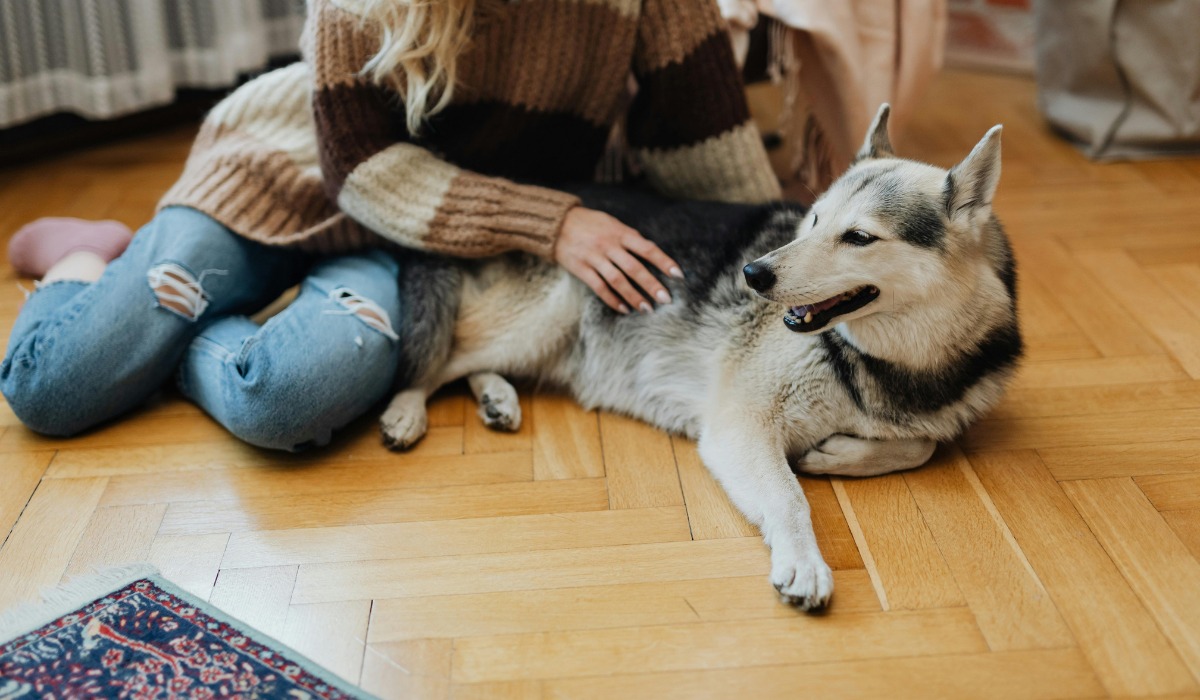
The best flooring for pets and dogs needs to resist scratches, repel moisture, and stay easy to clean without sacrificing your home’s appearance. Not every “pet-friendly” label tells the full story. We break down what genuinely performs under real conditions.
Pet ownership is at a record high in the United States. According to the American Pet Products Association’s National Pet Owners Survey, approximately 94 million U.S. households (71%) now own at least one pet. This represents an increase from 82 million two years earlier (2026). With pet industry spending reaching an estimated $152 billion in 2024, demand for performance-focused flooring is accelerating across the country. Homeowners are no longer settling for floors that just look good on installation day.
Why Flooring Choice Matters More for Best Flooring for Pets and Dogs
Dogs are hard on floors in ways that furniture and foot traffic simply are not. Claws act like fine sandpaper over time. Additionally, moisture from water bowls and accidents seeps into seams and subfloors. Pet dander embeds itself into porous surfaces as well. The wrong flooring choice leads to warping, staining, persistent odor, and premature replacement costs.
Beyond durability, traction matters for your dog’s health. Slippery surfaces put chronic stress on a dog’s joints. This is especially true for larger breeds and older animals. Comfort underfoot, ease of cleaning, and resistance to both scratches and moisture are essential criteria when evaluating flooring options.
The Top Flooring Materials, Ranked by Pet Performance
Luxury Vinyl Plank (LVP)
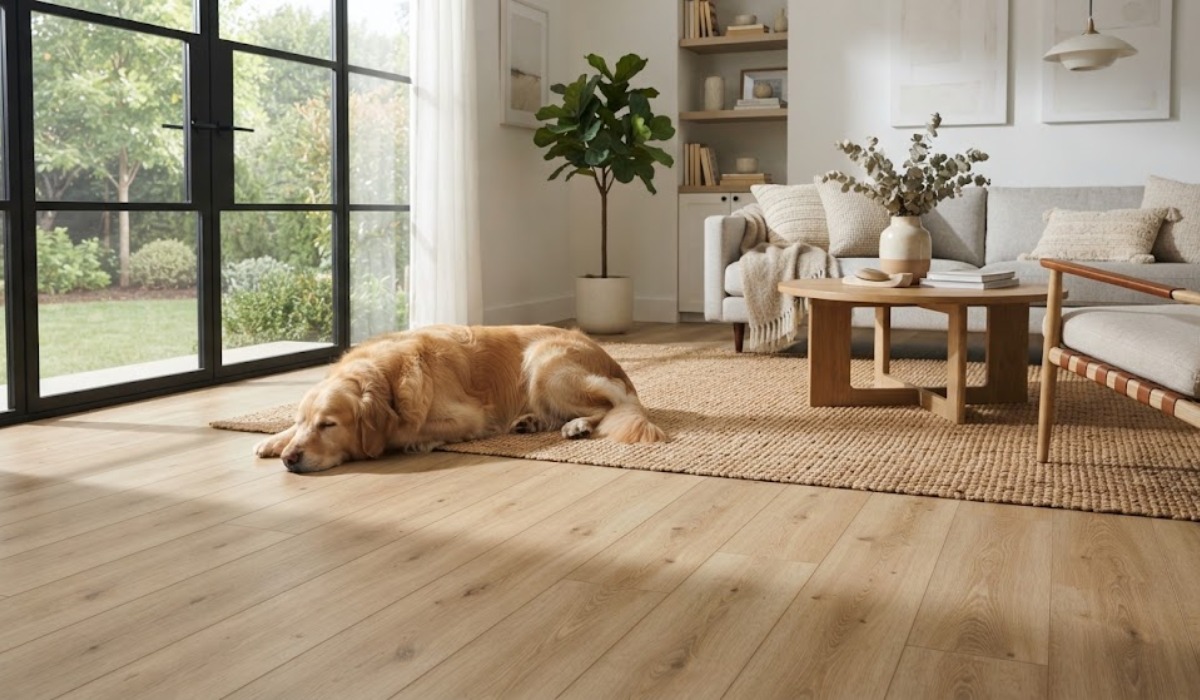
LVP is widely considered the strongest performer for households with dogs. Its wear layer resists scratches from claws. Furthermore, its waterproof core handles spills and accidents without warping. It offers enough texture that most dogs can walk on it without slipping. The flooring mimics the look of hardwood convincingly. Many homeowners installing it during full renovations alongside luxury kitchen remodel ideas use it to create a cohesive, high-end aesthetic throughout the home.
The tradeoff is important to consider. Lower-grade LVP can look and feel cheap. Thickness matters significantly. Look for products with a wear layer of at least 12 mil for heavy-use areas. Quality products from brands like Shaw and Pergo carry solid warranties and perform well over a decade of regular dog traffic.
Tile and Stone
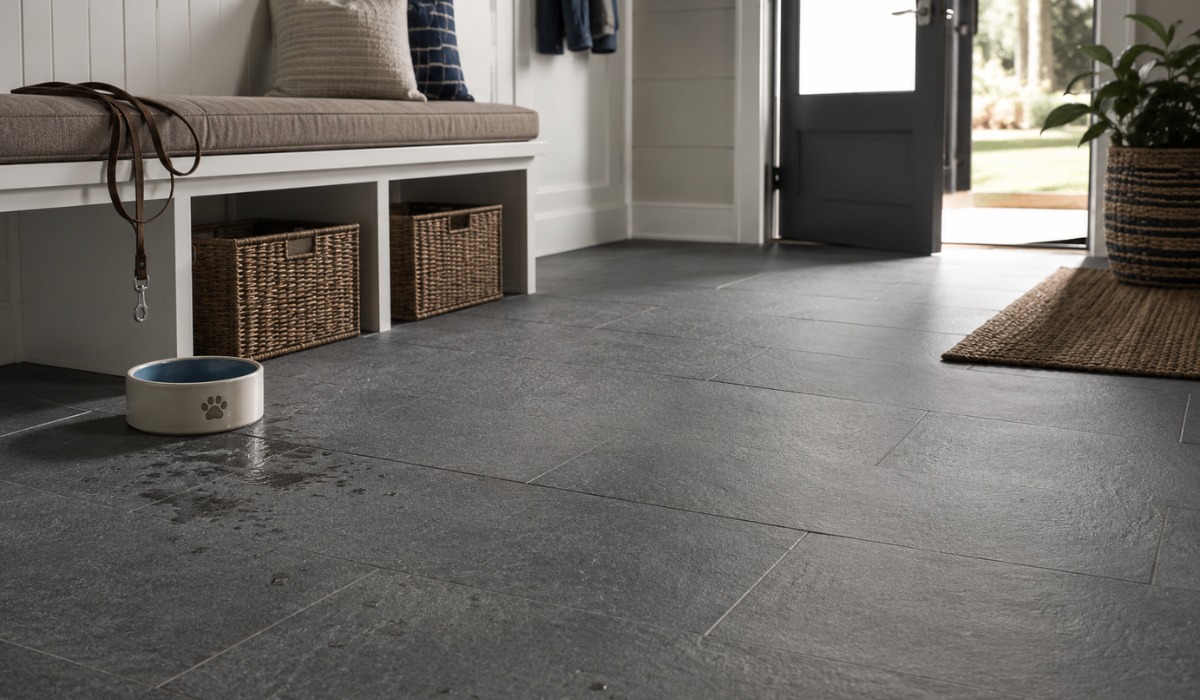
Porcelain and ceramic tile are virtually impervious to scratches and fully waterproof. They’re also easy to sanitize, which matters for households with dogs prone to tracking mud. The primary concern is comfort and traction. Unglazed tile or tile with a slightly textured finish gives dogs better grip than polished stone.
Tile is a natural fit for mudrooms, laundry rooms, and entryways. In addition, it works particularly well in the historic homes we work with regularly in Fairfield County, CT. Heated floors beneath tile also remove the cold-surface complaint that many homeowners raise in winter climates.
Hardwood Flooring
Solid hardwood is the most debated option for best flooring for pets and dogs. It scratches easily. Additionally, it’s vulnerable to moisture, and it requires more careful maintenance in pet households. That said, it remains the preferred choice for many of our clients in Fairfield County and Westchester County. It adds genuine long-term value to the home and can be refinished multiple times over decades.
If hardwood is the goal, species hardness matters considerably. Harder species like hickory, white oak, and Brazilian cherry resist scratching better than softer options. Matte or satin finishes hide surface marks better than high-gloss. Before committing, it’s worth reviewing hardwood flooring installation cost alongside the cost of engineered alternatives. The price gap between solid and engineered hardwood has narrowed considerably.
Engineered Hardwood
Engineered hardwood sits between solid hardwood and LVP in terms of pet performance. Its layered construction resists humidity and minor moisture exposure better than solid wood. Meanwhile, it still offers a real wood surface that can be lightly refinished. It performs particularly well in climates like Connecticut and New York, where seasonal humidity swings are significant. For everyday pet traffic, it holds up respectably.
Carpet: A Measured Assessment for Best Flooring for Pets and Dogs
Carpet is the most polarizing option in pet households. It absorbs odors and traps dander and fur. Additionally, it can stain permanently if accidents aren’t addressed quickly. However, the market is shifting. According to Global Market Statistics, synthetic fiber pet carpets comprised around 56% of shipments in 2024. Pet carpet variants with embedded odor-control features increased by 19% between 2023 and 2025.
Retailers report that more than 60% of pet owners now purchase carpets with antimicrobial or spill-resistant features. In August 2025, Mohawk Industries launched eco-friendly pet carpets made from 100% recycled PET fibers. In May 2025, Ruggable introduced a washable collection with odor-resistant technology. These innovations make carpet more viable in bedrooms or low-traffic areas. However, we generally advise against it in main living spaces for households with large or multiple dogs.
Things to Know
- Scratch resistance is rated by the Janka hardness scale for wood. A score above 1,200 lbf is a reasonable starting point for dog households.
- Waterproof and water-resistant are not the same thing. Only fully waterproof flooring like LVP with a waterproof core will prevent moisture from reaching the subfloor after a prolonged accident.
- Area rugs layered over hard flooring can improve traction and comfort for dogs. This approach avoids committing to carpet throughout the home.
- Grout lines in tile can trap hair and require consistent cleaning. Larger tiles with minimal grout spacing are easier to maintain.
- Flooring transitions between rooms matter significantly. Raised thresholds or sharp edges can be a tripping hazard for older dogs.
How Whole-Home Design Connects to Best Flooring for Pets and Dogs
Flooring doesn’t exist in isolation. Homeowners who invest in pet-friendly flooring often reconsider adjacent surfaces at the same time. A slip-resistant tile in a walk in shower design ideas shares the same logic as tile in a mudroom. Both resist moisture and clean easily, serving both humans and pets well. Similarly, when planning outdoor kitchen design ideas, the transition between interior flooring and exterior hardscape should account for how dogs move in and out of the space.
For clients considering full renovations, material and finish selection works best when planned together. Aesthetic and functional choices compound across the home when coordinated properly.
Choose Flooring That Performs for Your Household
At Gerety Building & Restoration, we’ve spent 40+ years helping homeowners in Fairfield County and Westchester County make flooring decisions that hold up over the long term. Whether you’re replacing damaged floors after years of dog traffic or building a home from the ground up with pets in mind, the right selection protects both your investment and your dog’s comfort.
Schedule a consultation with our design-build team to get a personalized recommendation. We base recommendations on your floor plan, your dog’s size and habits, and your aesthetic goals. Tell us what rooms you’re prioritizing and we’ll walk you through the options that genuinely perform in real pet households.
Frequently Asked Questions
Q: What is the most scratch-resistant flooring option for large dogs?
Porcelain tile is the most scratch-resistant flooring available for large dogs. It’s virtually impossible for claws to mark the surface. For homeowners who prefer a wood look, luxury vinyl plank with a thick wear layer (12 mil or above) is the most practical alternative.
Q: Is luxury vinyl plank truly waterproof, or just water-resistant?
Quality LVP with a waterproof core is genuinely waterproof, not just water-resistant. This means moisture from accidents won’t penetrate to the subfloor if addressed within a reasonable timeframe. Always verify that both the plank and its locking joints are rated waterproof, not just the surface.
Q: Can solid hardwood work in a home with dogs?
Solid hardwood can work with dogs, but it requires thoughtful species selection and realistic expectations about surface wear. Choosing a harder species like white oak or hickory makes a significant difference. Using a matte finish and keeping dogs’ nails trimmed extends the floor’s life between refinishing cycles.
Q: How do I reduce pet odors trapped in flooring?
Hard surface flooring is the most effective long-term solution for controlling pet odors at the floor level. Carpet absorbs odors into its fibers and padding regardless of cleaning frequency. If carpet is preferred for comfort, products with antimicrobial or odor-control technology like Mohawk’s recycled PET fiber lines perform measurably better than standard options.
Q: Does flooring affect my dog’s joint health?
Yes, flooring surface hardness and traction directly affect joint stress in dogs, particularly larger breeds and seniors. Tile and hardwood without rugs can be slippery and hard on joints over time. Layering area rugs over hard flooring or selecting LVP with a slight texture improves grip and cushions impact. This approach avoids sacrificing the benefits of a hard surface.