

A high-end kitchen renovation is one of the most consequential investments a homeowner can make, and in Westchester County, NY, and Fairfield County, CT, the stakes are particularly high. Homes in this region carry real architectural character and significant market value. A project that is executed well elevates both. A project that goes sideways can compromise finishes, timelines, resale value, and the daily livability of your home for months.
The challenge is that not all kitchen remodel contractors are built for this category of work. Volume builders, generalist remodelers, and specialized luxury kitchen contractors operate with fundamentally different capabilities, processes, and trade relationships.
Knowing how to distinguish between them before you enter conversations can save time, reduce budget risk, and improve your chances of a better outcome.
What’s In This Guide
- Why High-End Kitchen Remodels Demand a Different Kind of Contractor
- What to Look for in a Kitchen Remodel Contractor: 6 Non-Negotiable Criteria
- How to Vet a Kitchen Remodeler: A Step-by-Step Process
- Red Flags to Watch for When Interviewing Contractors
- The Contractor Vetting Checklist: What to Ask Before You Hire
- Frequently Asked Questions (FAQs)
- Start Your Kitchen Renovation with the Right Partner
Quick Facts
- Luxury kitchen remodelers need proven high-end experience.
- Design-build remodeling helps reduce communication gaps and scope drift.
- Custom cabinetry can take 8–16 weeks.
- Ask for comparable Westchester or Fairfield references.
- Strong proposals include scope, specs, timeline, and change orders.
Why High-End Kitchen Remodels Demand a Different Kind of Contractor
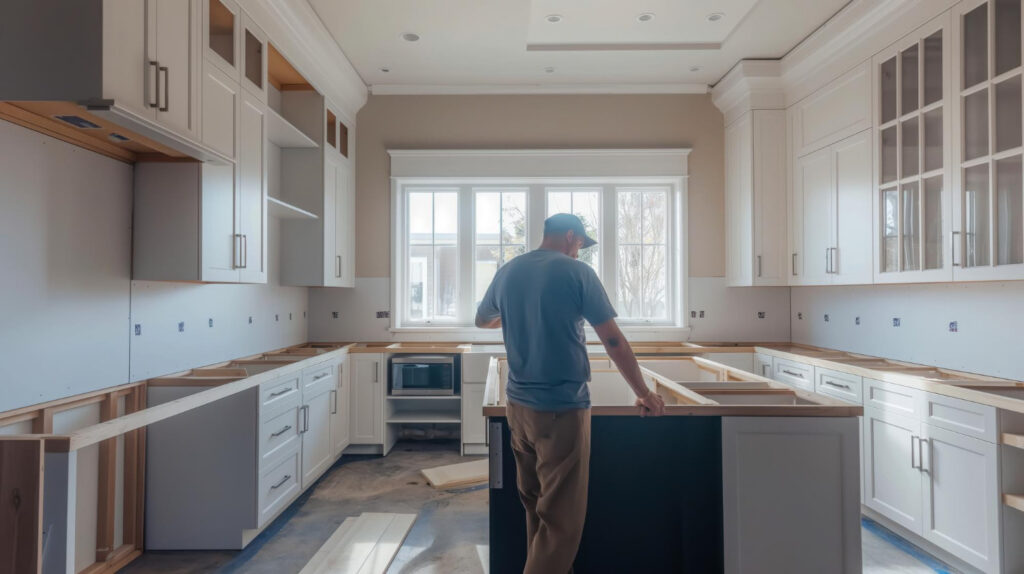
Luxury kitchen renovation and standard kitchen remodeling are not in the same category of work. The scope, coordination requirements, and level of craft involved are fundamentally different, and treating them the same way during contractor selection is where expensive, avoidable mistakes begin.
Older Homes Come with Layers Most Contractors Are Not Equipped to Handle
Many homes throughout Greenwich, Darien, New Canaan, Scarsdale, and Bronxville are pre-war or historic properties. The U.S. Census Bureau’s American Housing Survey documents that the Northeast has one of the oldest residential housing stocks in the country, with a significant share of homes built before 1960. Structural conditions, layered permit requirements, and material compatibility issues in these properties require specific experience to navigate correctly.
Finish Quality at This Level Demands Subcontractor Depth
A high-end kitchen project involves custom cabinetry, integrated appliance panels, hand-selected stone, and finish details that require a contractor with an established trade network and disciplined project management. Without both, quality becomes inconsistent, and timelines slip.
Design Collaboration Is a Core Requirement, Not a Bonus
When an architect or designer is part of your project, your contractor must engage as a fluent partner from the earliest stages, not simply receive finished drawings and build from them. Contractors who enter the process late introduce gaps between what was designed and what gets built.
What to Look for in a Kitchen Remodel Contractor: 6 Non-Negotiable Criteria
1. A Portfolio That Reflects Your Level of Project
A contractor’s portfolio is their most transparent credential. Review it specifically for projects that match your scope: budget tier, finish quality, and home type. Look for evidence of custom cabinetry fabrication, integrated appliance design, complex tile and stone work, and period-appropriate detailing if your home is an older or historic property.
Ask directly whether the portfolio work was designed in-house or handed to a separate design team. That answer reveals whether the contractor has genuine design fluency or primarily executes instructions from others, a meaningful distinction on a project where design and construction decisions are constantly intersecting.
2. A Defined Design-Build Process, Not Just Construction Capability
Design-build remodeling integrates design and construction under a single, coordinated team. This structure reduces the communication gaps, scope disputes, and timeline drift that arise when design and construction are managed by separate parties who are not in continuous alignment.
For high-end kitchen projects, that structure can reduce communication gaps and help homeowners make decisions with clearer cost and schedule context. Ask how design conflicts are handled mid-project, who holds final design authority, and how approved changes are documented throughout construction.
3. A Written Project Timeline with Defined Milestones
Vague timelines are a consistent red flag at the proposal stage. A qualified luxury kitchen contractor should be able to present a phased project schedule covering design completion, permitting, material procurement, demolition, construction, and finish installation before you sign anything.
Pay close attention to lead times on custom materials. Quality custom cabinetry fabricators typically require eight to sixteen weeks from order confirmation. Stone slabs, specialty hardware, and integrated appliance panels add additional procurement windows that must be built into the schedule proactively, not managed reactively once delays surface.
4. Demonstrated Collaboration with Architects and Designers
Many homeowners planning high-end kitchen renovations in Fairfield County and Westchester County are already working with architects or interior designers. Your contractor must function as a collaborative partner in that relationship, not a friction point.
Ask for references specifically from projects that involved a third-party design professional. How that relationship functioned in practice tells you far more about the contractor’s professional maturity than a polished presentation or a strong portfolio alone.
5. Trade Relationships That Support High-Specification Work
The quality of a luxury kitchen is inseparable from the contractor’s trade network. Ask where they source cabinetry, who handles countertop fabrication, and which appliance vendors they work with regularly. Ask about material tolerances and installation standards for high-specification finishes.
A contractor with deep, established trade relationships can help improve material coordination, lead time management, and issue resolution during or after construction.
6. References from Comparable Projects in the Region
References should come from homeowners with comparable project scope, home type, and location. A reference from a standard bathroom renovation or a commercial build does not give you useful information about how a contractor performs on a complex luxury kitchen in a century-old Fairfield County or Westchester County home.
When you speak with references, ask directly: How did the contractor handle unexpected conditions during construction? Was communication consistent and proactive? Would you hire them again, knowing what you know now?
MORE ON THIS TOPIC: Building a Custom Kitchen with Gerety Building and Restoration
How to Vet a Kitchen Remodeler: A Step-by-Step Process

Step 1: Define Your Scope Before You Reach Out
Establish your approximate budget range, identify which elements are fixed versus flexible, and confirm whether you are working with an architect or designer. This information allows contractors to assess fit accurately, and it helps you filter responses more quickly.
Step 2: Request Portfolios and Filter by Project Type
Review only contractors whose completed work demonstrates high-end residential kitchen renovations at a comparable level. Commercial builds and light residential remodels reflect a different skill set.
Step 3: Conduct Structured Interviews With Consistent Questions
Use the six criteria above as your interview framework and ask the same questions of every contractor you meet. Meaningful comparison is only possible when you have gathered information on the same terms.
Step 4: Review Every Proposal in Full Detail
A credible proposal should include a written scope of work, material specifications, a payment schedule, phased timeline milestones, and a documented change order process. Any element that is missing or vague deserves a direct question before you proceed.
Step 5: Check Houzz®, Google, and BBB® Profiles
Look at review volume, recency, and the quality of the contractor’s responses to feedback. Pattern matters far more than any individual review. A consistent record of professional, constructive responses is a meaningful trust signal.
Step 6: Visit an Active Job Site if Possible
How a contractor runs their active construction sites reflects directly on how they will treat your home. Look for organization, cleanliness, and visible communication between crew members.
Red Flags to Watch for When Interviewing Contractors
Some warning signs are easy to overlook when a contractor presents confidently in person. Watch for these regardless of first impressions:
- Verbal-only estimates without a written scope of work
- No formal project timeline at the proposal stage
- Inability or unwillingness to provide references from comparable luxury projects
- Resistance to collaborating with your existing architect or designer
- No documented process for managing change orders
- A portfolio that lacks custom or high-specification residential kitchen work
- Significantly lower bids than competitors, without a clear explanation of where costs were reduced
On a project of this scope, an unusually low bid is rarely a bargain. It typically signals reduced material quality, thinner trade relationships, or an incomplete reading of your project requirements.
The Contractor Vetting Checklist: What to Ask Before You Hire

Use this checklist when interviewing kitchen remodel contractors for a high-end project in Westchester or Fairfield County.
Portfolio and Experience
- Does their portfolio include luxury kitchen renovations comparable in scope, finish quality, and home type to your project?
- Have they completed projects on homes in Westchester County or Fairfield County with similar architectural character?
- Do they have documented experience with historic or pre-war homes, if applicable to your property?
Process and Structure
- Do they offer a design-build model with integrated design and construction management?
- Can they provide a written project timeline with defined milestones at the proposal stage?
- Is there a clear, documented process for managing change orders and mid-project decisions?
Collaboration
- Do they have experience working alongside architects and interior designers on concurrent projects?
- Who serves as the primary point of contact throughout the full project lifecycle?
Materials and Trade Partners
- Where do they source custom cabinetry, countertop fabrication, and specialty hardware?
- Can they provide material samples and specification sheets with the proposal?
References
- Can they provide references from comparable luxury kitchen projects in the Westchester or Fairfield County region?
- Are those references willing to speak specifically about how challenges were handled during construction?
Frequently Asked Questions (FAQs)
How many contractors should I get quotes from for a luxury kitchen remodel?
Three is the standard benchmark. It gives you enough range to compare process quality, proposal depth, and pricing without overwhelming the selection process.
Do I need permits for a kitchen remodel in Westchester County or Fairfield County?
In most cases, yes. Structural changes, electrical upgrades, plumbing relocations, and HVAC modifications typically require permits. Requirements vary by town, so your contractor should confirm local rules before work begins.
What should a kitchen remodel contract include before I sign?
At minimum: a written scope of work, material specifications, a payment schedule tied to milestones, a phased timeline, and a documented change order process.
Can I stay in my home during a high-end kitchen renovation?
It depends on scope and duration. Most full luxury kitchen renovations involve extended periods without a functional cooking space and active construction throughout. Many homeowners opt for temporary accommodations during peak construction.
How do I verify a contractor’s license in Connecticut or New York?
In Connecticut, verify through the Connecticut Department of Consumer Protection. In New York, Westchester County registrations are managed by the Westchester County Department of Consumer Protection. Always confirm active insurance as well.
Start Your Kitchen Renovation with the Right Partner
Choosing a kitchen remodel contractor for a high-end home in Westchester or Fairfield County is ultimately about alignment: a process that matches your project’s complexity, a portfolio that reflects the level of work you expect, and a team that can collaborate with your architect or designer without friction.
When you are ready to move forward with a firm that brings over 40 years of renovation and design-build experience to residential projects, Gerety Building & Restoration is where that conversation starts.